

The Alchemy of the Shed-Side Fertiliser Cannon
There is a quiet, magical sort of alchemy that takes place on the allotment during these crisp autumn days.
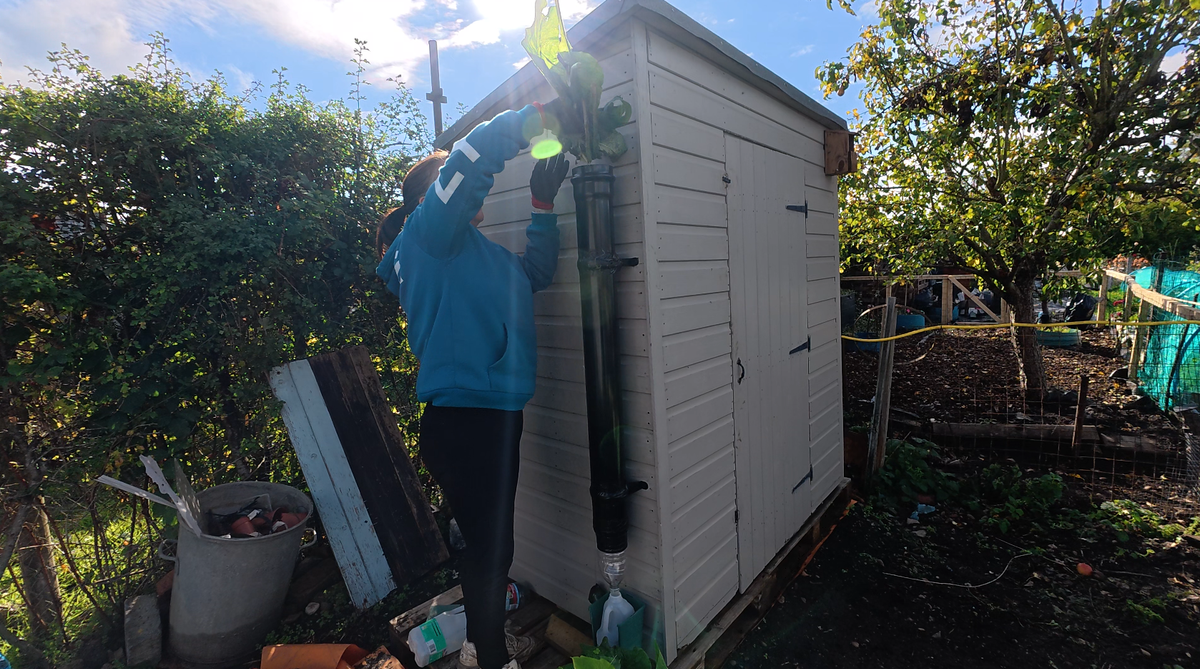
A quiet, magical sort of alchemy takes place on the allotment during these crisp autumn days. While the rest of the world rushes off to shiny garden centres to buy synthetic blue powders in plastic tubs, we have been huddled by the wooden shed, cooking up a dark, rich, entirely free wizard’s potion.
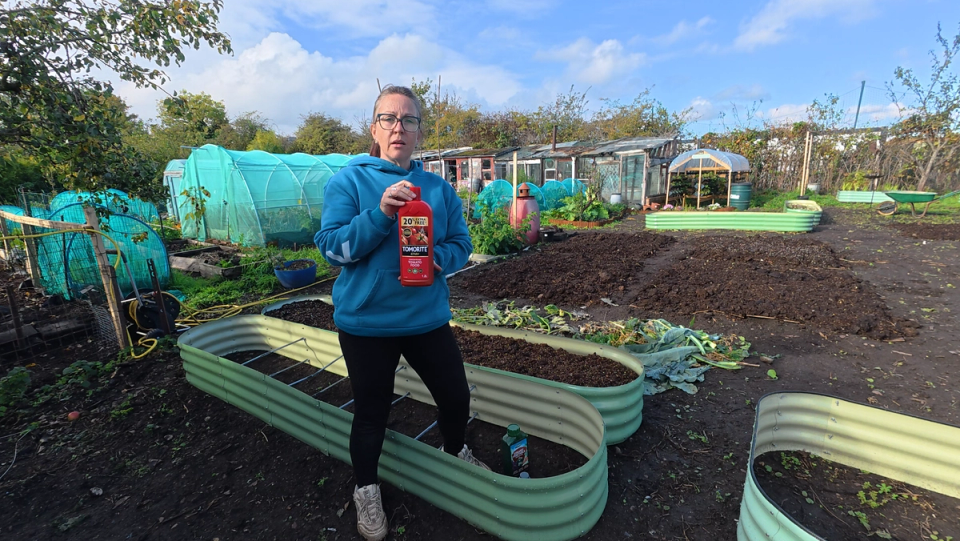
If you ask any old-school grower down the avenue what the single greatest secret to bumper crops is, they will all whisper the same word: Comfrey.
This deep-rooted, unassuming green herb is an absolute titan of the organic garden. Because its roots mine incredibly deep into the Nottinghamshire clay, tunnelling down into subterranean layers where ordinary plants could never reach, it acts like a dynamic accumulator. It draws up a wealth of pure gold from the deep earth: potassium, nitrogen, and vital trace minerals, storing them entirely inside its thick, lush green leaves. When you harness that power, you possess the ultimate organic rocket fuel for your tomatoes, fruiting cucumbers, and heavy-feeding summer crops.
But if you look up how to make comfrey fertiliser traditionally, you will usually find instructions that involve a giant bucket, a mountain of water, and an absolutely eye-watering smell that will make your neighbours down the plot want to move three fields away.
We don't do things the traditional way here. We like our solutions clever, compact, and completely mess-free. Say hello to our latest creation: The Shed-Side Fertiliser Cannon.
THE ALCHEMY BREAKDOWN
- The Traditional Problem: A smelly, stagnant bucket of water that dilutes the nutrients.
- Our Handy Hack: A vertical gravity-fed drainpipe system attached to the shed wall.
- The Weight: A heavy, moss-covered Nottingham stone to compress the foliage.
- The Output: Pure, unadulterated, black-gold fertiliser juice dripping straight into a bottle.
- The Cost: Absolutely £0.00. Repurposed materials and wild-foraged leaves.
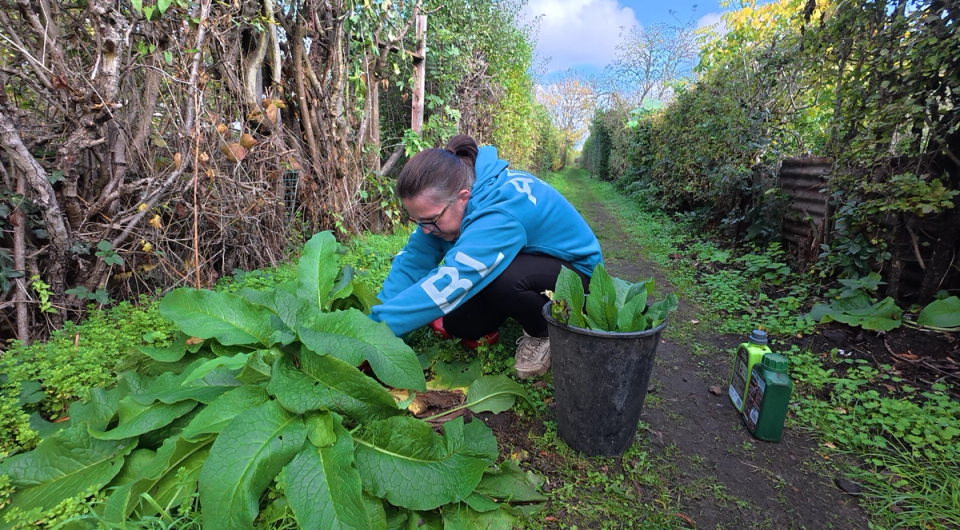
Building the Cannon
If you saw our latest video across the avenue, you'll know that this hack is as simple as it is brilliant. We took an old piece of plastic drainpipe that had been sitting behind the greenhouse since last winter, scrubbed it, and securely fixed it vertically to the sunny side of our timber shed wall.
At the very bottom of the pipe, we rigged up an old plastic bottle upside down to act as a funnel, which neatly channels down into a secondary catch bottle resting on the soil below.
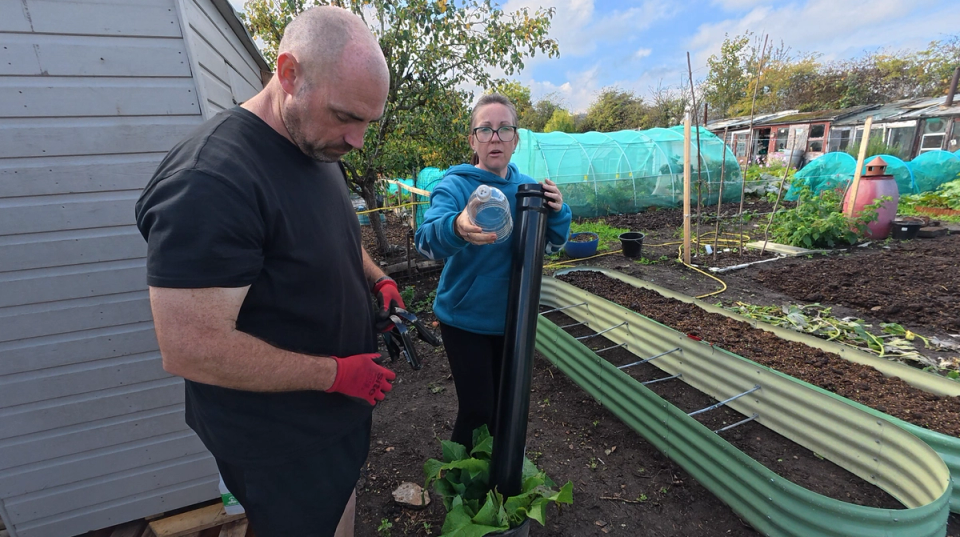
Instead of filling a barrel with water and drowning the leaves, we harvest bushels of fresh green foliage from the plot edges, chop them roughly, and pack them tightly into the top of the open pipe. Then comes the rustic engine: we drop a heavy, smooth stone straight down into the pipe to sit on top of the leaves.
With the pipe packed tight and the stone applying constant, gentle gravitational pressure, the magic begins to brew out of sight. No water is added. Instead, as the weeks tick by, the cell walls of the packed leaves naturally break down under the weight of the stone. Because there is no added water to dilute the mixture, what drips out of the bottom nozzle is not a watery, foul soup, but a thick, jet-black, highly concentrated, neat elixir. It is completely pure, shelf-stable, and smells remarkably earthy rather than repulsive.

The Garden Medicine: When and What to Feed
To understand why this dark magic works so beautifully, you have to look at the unique nutritional property packed inside that catch bottle.
- The Primary Nutrient: High Potassium (K). Comfrey is absolutely bursting with natural potash, which is the essential element plants need to produce massive blossoms and abundant fruit.
- What It Feeds: This makes it the ultimate superfood for your fruiting crops. It is exactly what you want to feed your greenhouse tomatoes, our climbing 'Carman' cucumbers, hanging squash vines, sweet peppers, and even your permanent strawberry beds. It encourages flowers to set and helps fruits swell into heavy, juicy prize-winners.
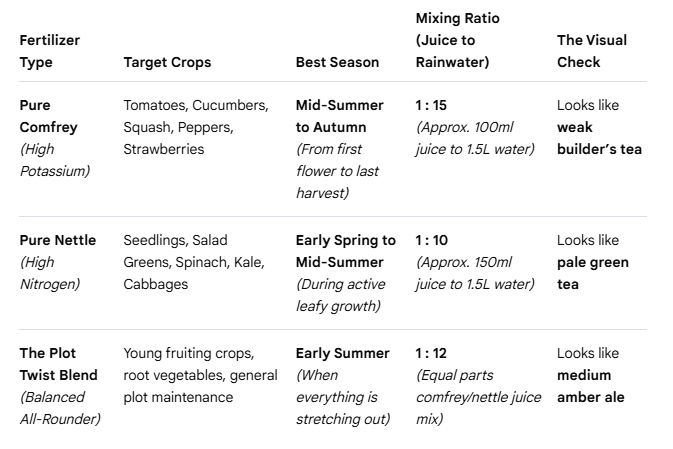
- The Seasonal Timing: This is primarily a mid-summer to autumn tonic. You want to start dousing your soil with diluted comfrey juice the exact moment you see the very first yellow blossoms appearing on your tomato vines, continuing right through the high summer harvest until the autumn chill sets in.
When it comes time to use it, we take just a tiny splash of this neat elixir from our catch bottle, dilute it with a beautiful wooden can of rainwater until it looks like weak builder's tea, and feed it straight to the roots.
The Allotment All-Rounder: Can You Use Nettles Too
Now, a few growers down the avenue might wonder if this clever little cannon is a one-trick pony. Over on Gardeners' World, they showed that you can absolutely use this exact same pipe method to brew up a batch of stinging nettle fertiliser, and they are completely right!
Our shed-side pipe is actually a year-round, multi-functional potion maker. If comfrey is the undisputed king of fruiting crops, then the humble stinging nettle is the queen of lush green growth. Nettles operate on a completely different nutritional frequency, packed with rich Nitrogen.
Because nettles are a bit more fibrous and stringy than juicy comfrey leaves, they take a little bit longer to break down under the weight of the stone inside the dark tube. But if you pack the cannon with fresh, young nettle leaves in the early spring, you will catch a spectacular, high-nitrogen elixir. It is perfect for waking up sleepy spring seedlings, boosting your leafy salad greens, and feeding hungry green crops like kale and cabbages.
Just make sure you keep your thick leather gardening gloves on when stuffing the pipe, or the cannon will bite back!
The Ultimate Penny-Saver
In a time when everything seems to cost a small fortune, there is an immense, grounding satisfaction in knowing that the highest-potency plant food on the planet is completely free. We didn't spend a single penny on store-bought components; we simply looked at what was lying around, listened to the resourcefulness of Grandad Townes and Grandad Murray, and let nature do the heavy lifting.
It's sustainable, it's tidy, and it turns wild green leaves into pure liquid gold right before your eyes. Our fertiliser cannon is officially locked, loaded, and dripping its way to a magnificent next harvest!
The Alchemist’s Dilution Quick-Guide
RUSTIC TOP TIP
Always try to use harvested rainwater from your water butts rather than tap water. Tap water contains chlorine, which can disrupt the beneficial, living soil microbes you are trying to feed!